How Mid-Market Manufacturers Are Closing the Capability Gap
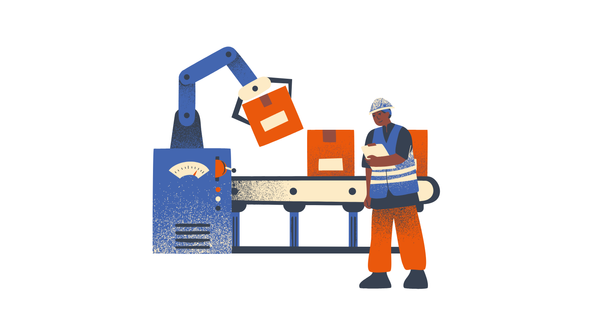
Mid-market manufacturers face a distinct challenge: they compete against enterprises with deeper resources while operating with leaner teams and tighter budgets. The gap between aspiration and capability has historically defined this segment. What's changing is how these organizations are addressing it, not by trying to match enterprise scale, but by making strategic investments in technology, leadership models, and workforce development that deliver disproportionate returns.
The transformation underway in this segment isn't about adopting the latest trends. It's about building the operational foundation necessary to compete effectively in markets where customer expectations, supply chain complexity, and competitive intensity continue to escalate. The manufacturers making progress share a common approach: they're investing selectively in areas that directly address their most pressing constraints.
Strategic moves that signal transformation
The most visible indicator of mid-market transformation appears in strategic partnerships and technology investments. These decisions reflect a shift from incremental improvement to fundamental capability building.
Ashish Goyal, VP Finance at LTI Holdings, points to one such move in the thermal management sector: "Looking forward to Boyd Thermal's accelerated growth with Eaton backing." Strategic partnerships with larger enterprises provide mid-market manufacturers access to capital, distribution networks, and technical resources that would take years to build independently.
Technology infrastructure represents another critical investment area. Organizations are moving beyond basic ERP implementations to adopt integrated systems that connect previously siloed functions. The challenge isn't selecting technology. It's implementing systems that deliver immediate operational value while providing a foundation for future capabilities.
The pressure to transform comes from multiple directions simultaneously. Tim Fennema, Chief Financial Officer at Weiss Technik of North America, observes broader industry dynamics: "Companies must rethink strategies to balance innovation, cost management, and workforce sustainability." This tension between competing priorities defines the mid-market experience. Unlike enterprises that can pursue multiple initiatives in parallel, mid-market manufacturers must sequence investments carefully and ensure each delivers measurable returns.
The workforce dimension of transformation extends beyond traditional training programs. Kurt Hodgin, Chief Financial Officer at ArmorWorks Holdings, frames the challenge directly: "As a senior leader, how are you preparing your human capital to move or change their skills to gain productivity in light of AI?" This question reflects a fundamental shift in how manufacturers think about talent development. The focus has moved from maintaining existing capabilities to actively reshaping workforce skills to align with new technologies and processes.
New leadership models emerge
Mid-market manufacturers are experimenting with leadership structures that would have seemed impractical a decade ago. The traditional model of full-time executive hires for every senior role is giving way to more flexible approaches that provide access to specialized expertise without the overhead of permanent positions.
Thomas Samlaska, CFO at Viking Engineering and Development, explains one such model: "Fractional leaders are seasoned professionals who integrate into an organization on a part-time basis over an extended period." This approach allows manufacturers to access CFO, controller, or operational leadership expertise at a fraction of the cost of full-time hires. The model works because these leaders bring immediate expertise and can operate effectively without the ramp-up time required for permanent hires.
The shift toward fractional and interim leadership reflects a broader recognition that mid-market manufacturers need different capabilities at different stages of growth. A company implementing a new ERP system requires different leadership skills than one optimizing an existing operation scaling and governing integrations across mature systems, where the focus shifts from change management and vision-setting to operational discipline, cross-functional alignment, and continuous optimization of data flows. Flexible leadership models allow organizations to match expertise to current needs rather than maintaining permanent overhead for capabilities they only need periodically.
Cross-functional collaboration represents another dimension of leadership evolution. Dan Kerbauy, VP of Finance - Operations and Commercial at Utah Plastics Group, describes building this capability: "I had the privilege of building strong, collaborative partnerships with our Metals Operations and Commercial teams from day one." Breaking down silos between finance, operations, and commercial functions creates visibility and coordination that directly impacts decision quality and execution speed.
This collaborative approach matters because mid-market manufacturers can't afford the inefficiencies that come from functional isolation. When finance, operations, and commercial teams work from different data sets or pursue conflicting priorities, the organization loses the agility that should be its competitive advantage against larger competitors.
What drives sustained commitment
The manufacturers making meaningful progress share a common characteristic: visible commitment from leadership to long-term capability building. This commitment manifests in consistent investment even when short-term pressures might justify cutting back.
Samantha Stuard, Chief Financial Officer at Pointe Precision, expresses this perspective: "Proud to work for a Company who is investing in its future!!" This statement, while brief, signals something important about organizational culture. Companies that successfully transform create environments where employees recognize and value strategic investments in capabilities that may take years to fully mature.
The challenge for mid-market manufacturers is maintaining this commitment through economic cycles and competitive pressures. Unlike enterprises with diversified revenue streams and financial buffers, mid-market companies feel market volatility more acutely. Continuing to invest in transformation during difficult periods requires conviction that these investments will deliver competitive advantages that justify short-term costs.
The integration challenge also intensifies as manufacturers adopt more sophisticated systems. Connecting ERP, CRM, supply chain management, and manufacturing execution systems creates complexity that many mid-market IT teams struggle to manage. Organizations need integration capabilities that can handle real-time data synchronization, complex transformations, and bi-directional flows between systems that weren't designed to work together.
This is where the gap between simple automation tools and enterprise integration platforms becomes problematic. Point solutions like Zapier lack the robustness for production manufacturing environments, while enterprise platforms like MuleSoft require dedicated development teams and budgets that mid-market manufacturers can't justify. The missing middle—integration platforms that provide enterprise capabilities without enterprise complexity and cost—represents a critical enabler for mid-market transformation.
Building the connected foundation
Successful transformation in mid-market manufacturing depends on creating a connected operational foundation where data flows seamlessly between systems, processes adapt to changing requirements, and teams have real-time visibility into operations. This foundation enables the agility and responsiveness that mid-market manufacturers need to compete effectively.
The integration challenge extends beyond technical connectivity. Manufacturers need systems that business users can manage and modify without constant IT intervention. When every integration change requires developer resources and weeks of implementation time, organizations lose the flexibility that should differentiate them from larger competitors.
Ariox built Lumino specifically to address this gap. The platform provides enterprise-grade integration capabilities through a user-managed interface that doesn't require dedicated development teams. With over 100 pre-built connectors for ERP, CRM, TMS, WMS, and e-commerce systems, Lumino enables mid-market manufacturers to connect their critical business systems and automate workflows without the complexity and cost of traditional enterprise integration platforms.
The platform's approach reflects how mid-market manufacturers actually operate. Rather than requiring organizations to build integrations from scratch, Lumino's Tailored Integration Services team implements integrations to specification, then hands over management to the customer. This model provides the expertise needed for initial implementation while giving organizations ongoing control over their integration environment. For manufacturers in sectors like precision machining, medical device manufacturing, or engineered materials, this means connecting shop floor systems to ERP, synchronizing customer data between CRM and order management, and automating supply chain workflows—all through a single platform with predictable monthly costs.
The difference between struggling with integration and having a robust connected foundation often determines which mid-market manufacturers successfully transform and which remain constrained by disconnected systems and manual processes. As these organizations continue investing in new capabilities, the ability to integrate those capabilities into existing operations becomes increasingly critical to realizing value from transformation investments.
Newsletter Sign-up
Sign up with your email address to receive news and updates
We respect your privacy.